








Real estate isn't a purchase — it's a strategy.
The buyer who picks an apartment "because the view is lovely" and the buyer who runs the numbers on yield, tax and exit will be living in two completely different financial realities five years from now.
Why "just buy something by the sea" isn't a plan
The Costa del Sol sells itself with 320 days of sunshine a year — which is exactly why it's so easy to make an emotional decision here. But the market doesn't reward emotion. It rewards calculation: the right location, a liquid asset, and a clear idea of who you'll rent to or sell to next.
Strategic buyers ask three questions before they ever book a viewing: what's my goal, what's my time horizon, and what's my exit. Without answers, even the prettiest villa becomes an expensive liability.
Income or capital growth: pick your game
These are two fundamentally different strategies, and blending them blindly is a mistake.
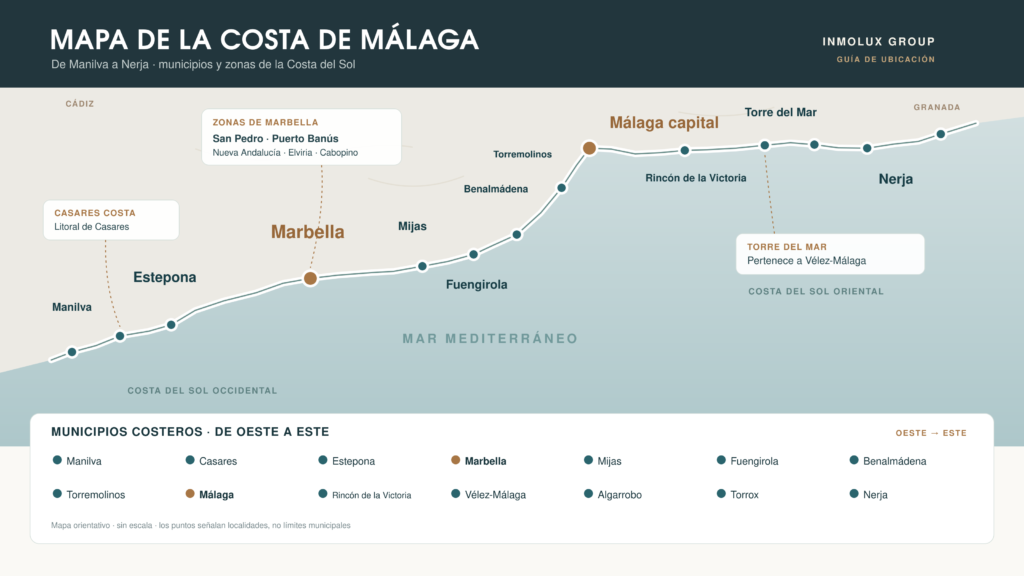
- Rental income: apartments on the Costa del Sol in Fuengirola, Benalmádena and Estepona generate steady cash flow from short- and long-term lets.
- Capital appreciation: prime areas like Marbella and Sotogrande rise more slowly in percentage terms but protect capital far more reliably — the classic investment strategy.
- Hybrid: new-build developments with rental management let you combine income with gradual value growth.
Where the strategy hides on the Costa del Sol
The same budget behaves very differently from town to town. Compare the logic:
| Location | Strength | Best for |
|---|---|---|
| Marbella | Prestige, liquid luxury market | Capital preservation |
| Estepona | Rising area, strong new-build pipeline | Capital growth |
| Fuengirola | High rental demand year-round | Steady income |
| Mijas / Benalmádena | Balance of price and lifestyle | Living + letting |
The hidden costs that wreck the math
The asking price is never the price you actually pay. In Andalusia you also budget for:
- transfer tax (ITP) on resale homes, or VAT (IVA) on new builds;
- notary, land registry and legal fees;
- annual IBI property tax and community of owners charges;
- maintenance, insurance and — if you let — non-resident income tax.
A strategist builds these 10–13% into the model from day one, rather than discovering them at the notary's desk.
Mortgage and currency: leverage, not obstacle
Non-residents can typically borrow 60–70% of the value from a Spanish bank. That isn't just a way to "afford" the purchase — it's leverage: when the market rises, you gain on the full asset value while having invested only a fraction. But the exchange rate between your home currency and the euro is part of the strategy too — lock it in deliberately.
Exit strategy: sell it in your head before you buy
The best investors know how they'll exit before they enter. A liquid asset in a sought-after location sells in weeks; an illiquid one can sit for years. Ask yourself: who buys this from me in 5–7 years, and why? If you need a foundation, explore our Costa del Sol area guides.
Ready to move from emotion to strategy? Get in touch with the InmoLux team on the Costa del Sol — we'll match a property to your real goal and run it as an investment, not a daydream.