



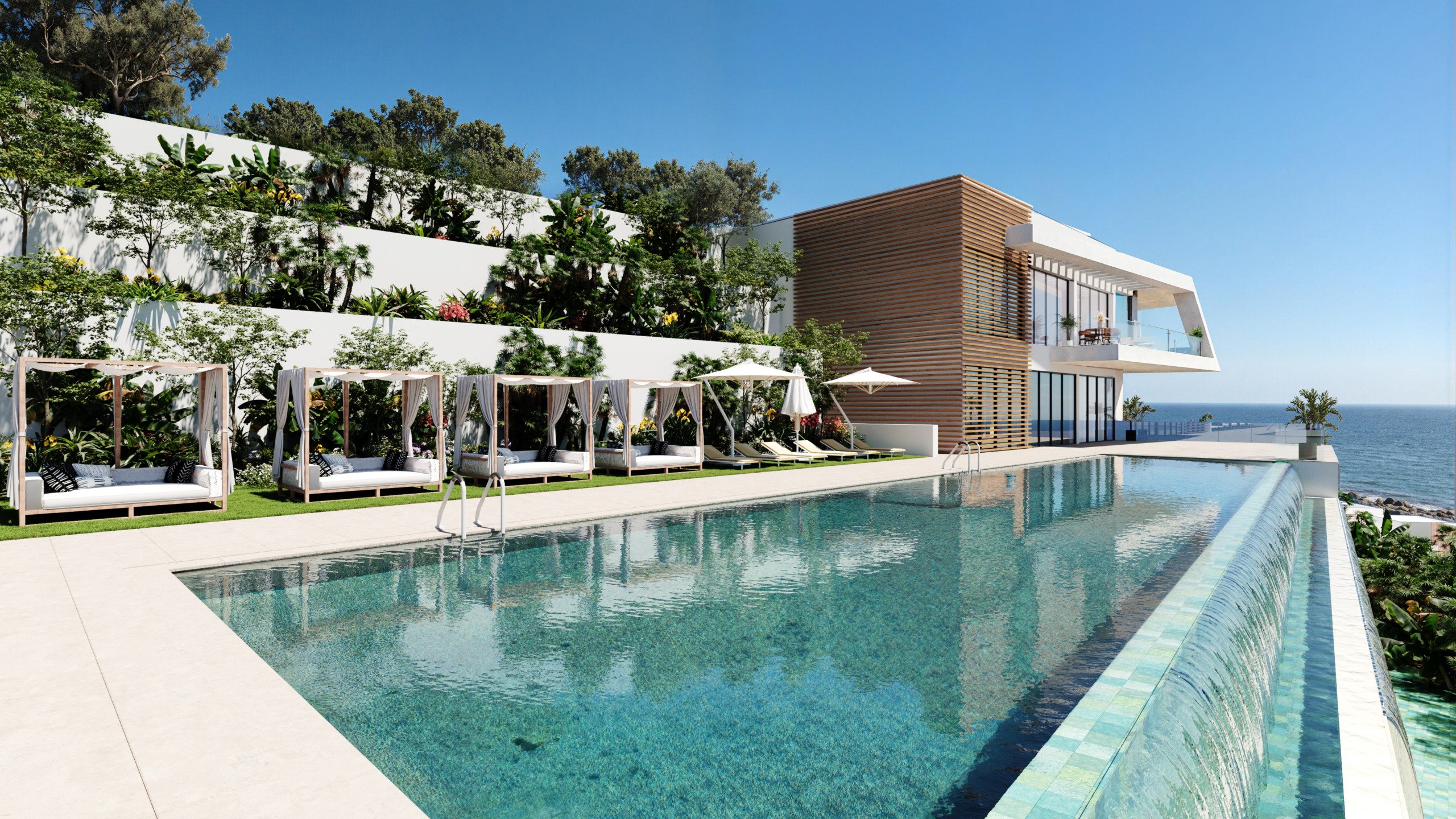
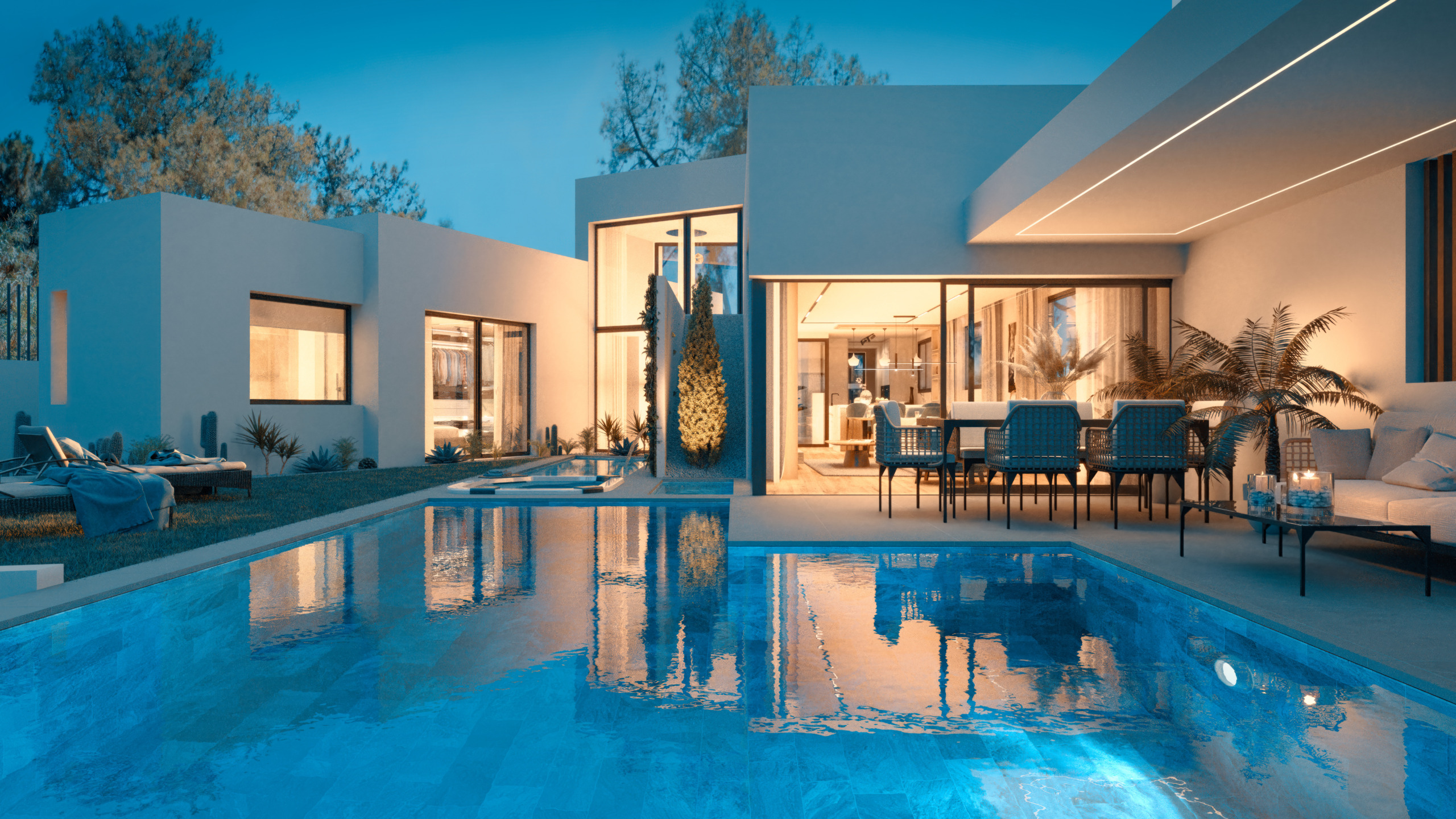
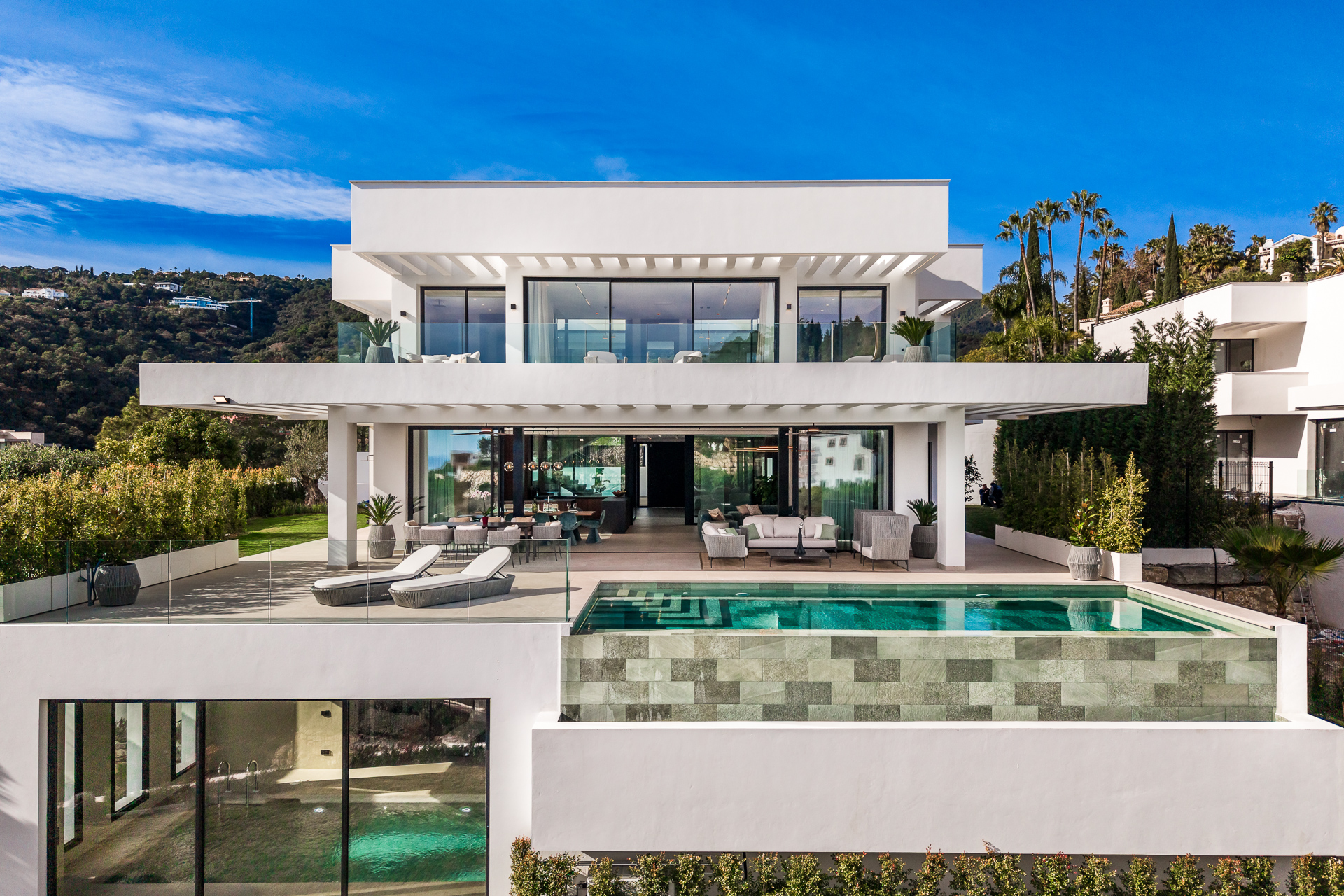
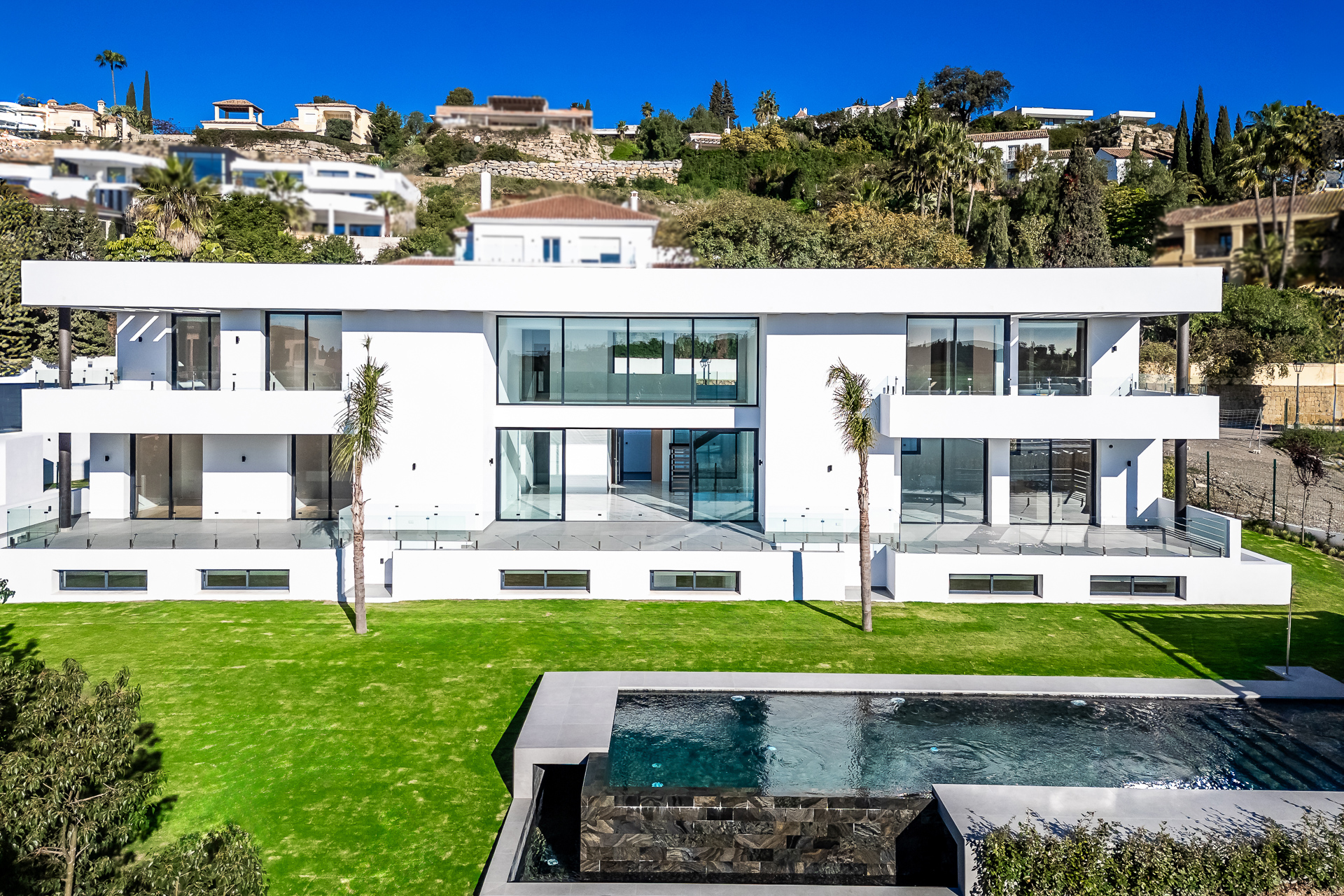
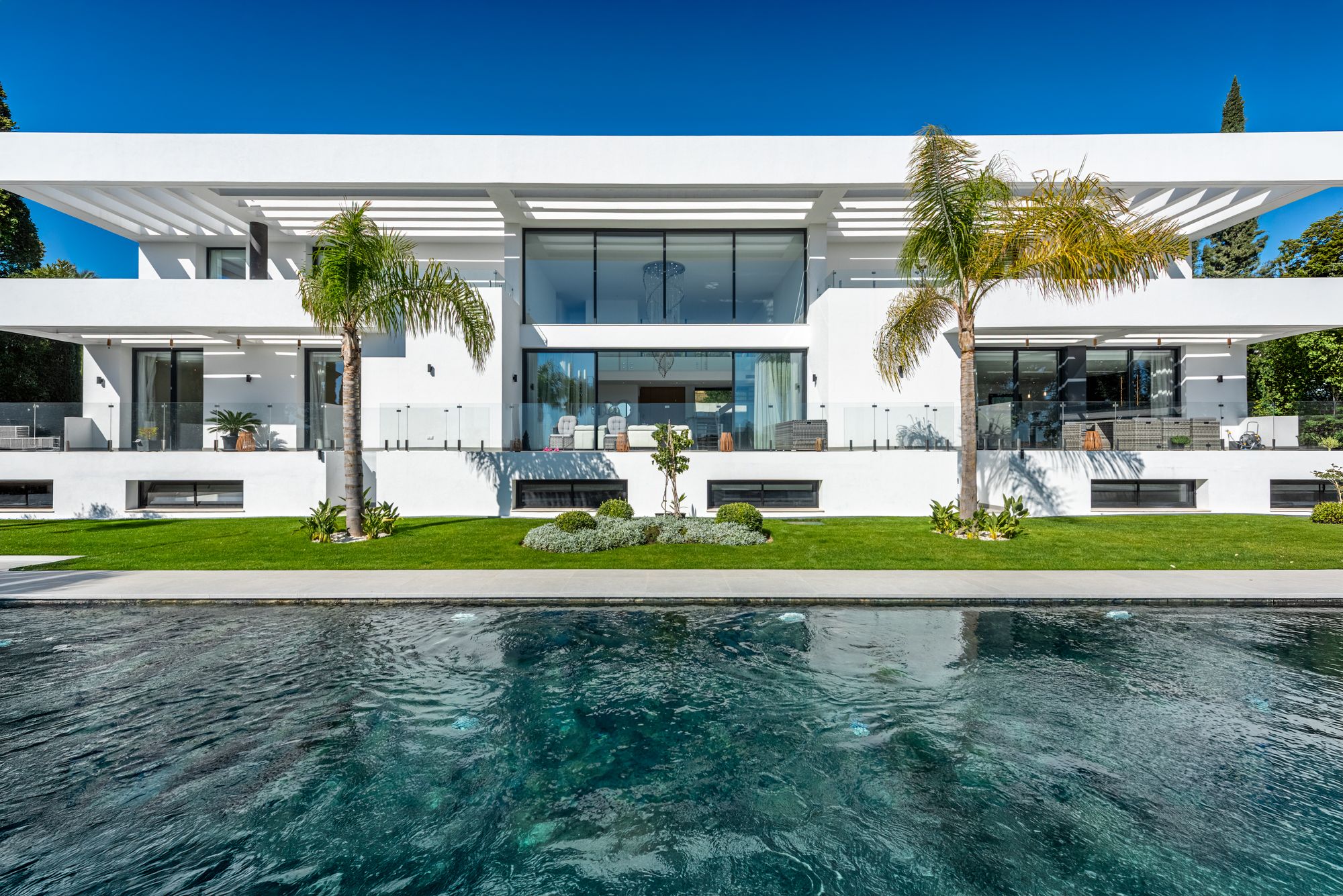
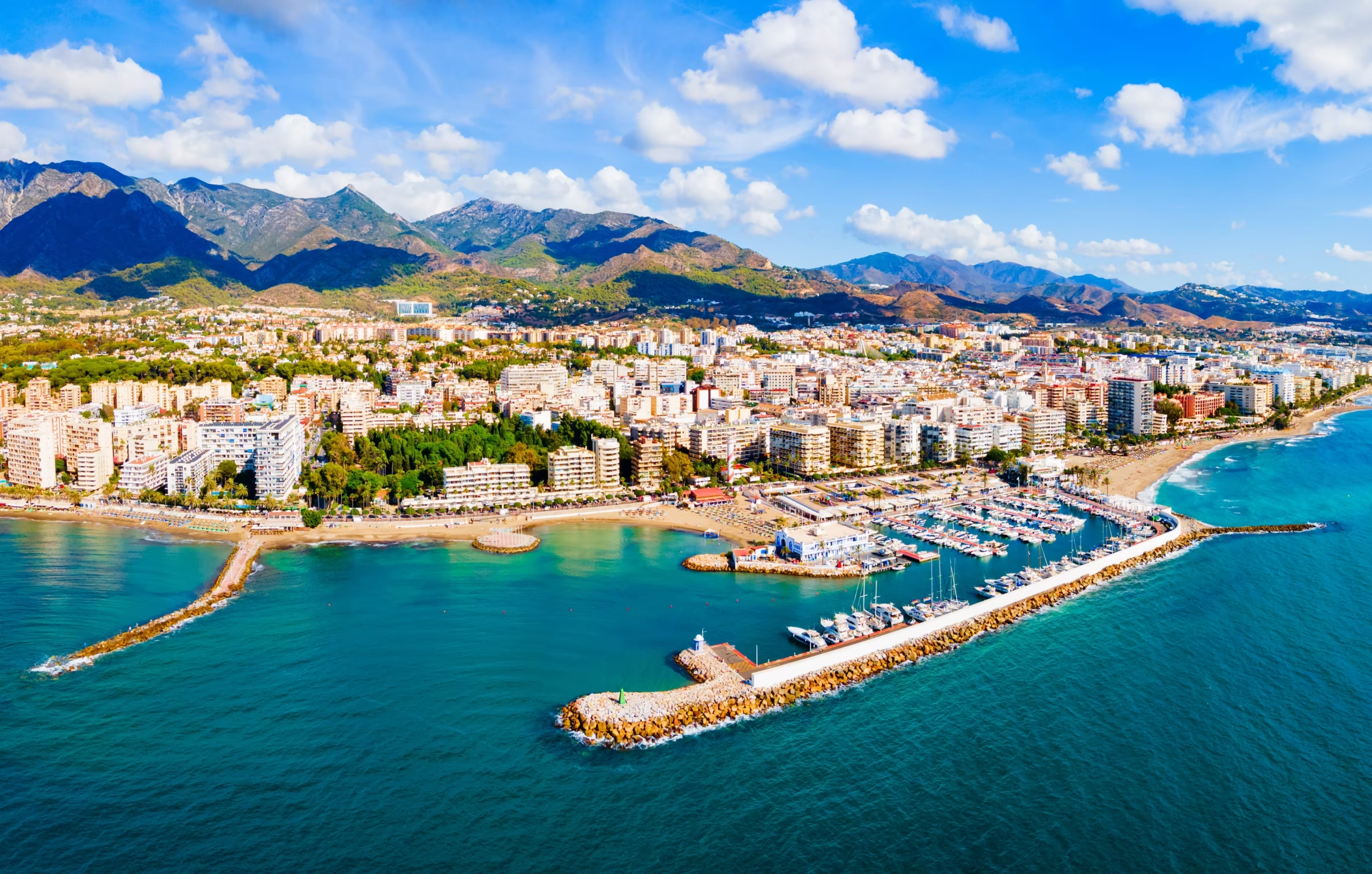
Marbella Centre and the Golden Mile form a residential axis very different from that of the peripheral urbanisations. Here the attraction is being able to integrate housing into daily life: walking to the sea, restaurants, shops and services from the centre; or enjoy greater privacy, space and exclusivity as you travel along the Golden Mile. For the international buyer, it offers something unusual in a destination of this level: combining a renowned address with true urban living twelve months of the year.
| Málaga Airport | ~40 min by car (~55–60 km via the AP-7) |
|---|---|
| Gibraltar | ~1 hour by car (~78 km) |
| Coastline | around 27 km, with more than 20 beaches (24 according to the city council) |
| Golf | more than 30 courses within easy reach — one of the highest concentrations in Europe |
| Dining | 4 Michelin-starred restaurants (Skina ★★, Nintai ★, Messina ★, El Lago ★) |
| Climate | subtropical Mediterranean, with around 320 days of sunshine a year |
| Population | around 156,000 residents |
| Property types | apartments, townhouses, villas, penthouses and new developments |
| Average asking price (municipality) | around €6,000/m² (asking prices, early 2026) |
| Price range | from around €350,000 (apartments) to €20M and above (frontline villas) |
| Ideal for | year-round living, investment, holidays and family relocation |
Location and connections
Marbella Centro is located approximately 55–60 km from Málaga–Costa del Sol airport, with a typical journey time of about 40–45 minutes by car. From the centre the axis of the Golden Mile begins to the west, so that both markets share quick access to the airport, the Mediterranean and the main services of the city. This connectivity allows the property to be used both as a habitual residence and for frequent stays of a few days.
A Marbella that can also be experienced on foot
One of the fundamental differences compared to other residential areas is the real possibility of reducing car dependency. In Marbella Centro, the Old Town, Avenida Ricardo Soriano, the beach, the promenade, shops and restaurants can be part of a pedestrian routine. On the Golden Mile the car gains importance, especially in inland locations, although numerous properties close to the sea maintain access on foot to the promenade, restaurants and hotels.
The climate as part of the home
The climate allows terraces, walks by the sea and outdoor spaces to be part of the routine for much of the year. In the Centre and the Golden Mile, this factor also acquires an urban dimension: having breakfast on a terrace, walking along the Mediterranean or using the exterior of the home are not experiences limited to the summer months.
Where international Marbella was born
The character of this part of Marbella is understood through two complementary stories. The Old Town preserves the structure and heritage of the historic Andalusian city; The Golden Mile represents the evolution of Marbella as an international residential destination since the mid-20th century. That combination of local authenticity and international recognition continues to be one of its main differentiating elements. The Old Town itself preserves pedestrian streets, traditional architecture and remains of the medieval wall. Turismo Marbella
Two rhythms of life within the same direction
Marbella Centro offers a more urban and spontaneous experience: cafes, restaurants, beach, shopping, promenade and everyday services within a short distance. The Golden Mile progressively introduces greater privacy, larger homes and lower density residential environments, whilst maintaining proximity to the centre. Choosing between the two is not so much a question of prestige as of how you actually want to use the property.
Who Marbella suits
Especially attractive to buyers who value time and convenience: second home owners who want to arrive and start enjoying Marbella immediately; international buyers who spend long periods of time; couples and families who want to combine privacy with proximity to services; and value-focused buyers who prioritize an established and recognizable location.
How to choose within Marbella Centre and the Golden Mile
Even within this axis there are microlocations with very different profiles. The Old Town prioritizes character and authenticity; the urban centre, comfort; Fontanilla and the promenade, immediate proximity to the Mediterranean; the Golden Mile by the sea, exclusivity and scarcity; and the interior positions of the Golden Mile and Nagüeles offer greater tranquility, surface area and privacy. The right decision begins by defining how you want to live the property.
The Golden Mile
The Golden Mile connects Marbella Centre with some of its most recognized residential and hotel addresses. Its value does not come solely from the name: it combines proximity to the sea, high-level gastronomic and hotel offerings, established residential communities and increasingly limited land availability. Within the Golden Mile itself there are great differences between the frontline, beach side, interior areas and properties located at higher levels.
Nagüeles and the inner Golden Mile
Nagüeles represents the most residential aspect of the Golden Mile: more vegetation, larger plots and a feeling of withdrawal from the seafront, without losing proximity to the centre and the coast. It is especially interesting for those looking for a villa or a more private home without moving their daily life to a remote urbanisation.
Marbella Centre
The centre is the most logical option for those who want to experience Marbella and not just reside there. The proximity to restaurants, shops, services, the beach and the Old Town allows you to carry out a large part of your routine on foot. The predominant product is the apartment, from traditional renovated homes to penthouses, beachfront properties and contemporary new construction projects.
Promenade and Fontanilla
Between the centre and the Mediterranean is one of the most attractive micromarkets for those who prioritize the immediate use of the home. Fontanilla and the surroundings of the promenade allow you to combine beach, restaurants, sports and the urban centre on foot. Plaza del Mar, next to the promenade and La Fontanilla, is also a space frequented throughout the year by both residents and visitors. Turismo Marbella
Old Town and surroundings of the historic centre
The Old Town offers a completely different product: homes and apartments integrated into the historical fabric of Marbella, with pedestrian streets, small squares, restaurants and independent commerce. It is not the option for those looking for large developments or large common areas, but for those who value character, centrality and a direct relationship with city life.
From the Old Town to the Golden Mile
A few kilometers separate two very different ways of living Marbella. The Old Town concentrates traditional architecture, pedestrian streets and urban life; towards the sea the centre and the promenade appear; and to the west, the Golden Mile progressively introduces larger properties, premium residential complexes and high-end homes. This continuity allows you to choose between city, beach and privacy without leaving the most established centre of Marbella.
Gastronomy and social life
Restoration is a real part of daily life in this area, not just a tourist offer. Marbella Centro brings together everything from traditional establishments to contemporary restaurants, while the Golden Mile incorporates some of the city's main high-end hotels, restaurants and social spaces. Being able to access this offer without planning large trips is one of the attributes most valued by the owner who uses his home frequently.
- Skina represents the most sophisticated gastronomic aspect of the Old Town, integrated into the historical fabric of the centre.
- Nintai expands the centre's haute cuisine offering with an intimate Japanese offering.
- Messina is part of a contemporary gastronomic scene that allows you to find high-level restaurants within the urban centre itself.
The real advantage is not in accumulating names, but in concentrating options. From restaurants in the Old Town and the centre to the gastronomic offer of the main hotels on the Golden Mile, it is possible to completely change the environment in just a few minutes.
The beach as part of the routine
In Marbella Centre the relationship with the Mediterranean is especially direct. From numerous downtown areas you can walk to the beach and boardwalk, making them a natural extension of everyday life. On the Golden Mile, properties and communities with close access to the sea also acquire a scarcity component that is especially relevant in asset terms.
- La Fontanilla — The main urban beach reference in the centre and one of the locations that best allows you to combine housing, promenade and services without depending on the car. The municipal tourist portal itself places it directly on the Paseo Marítimo. Turismo Marbella
Boardwalk and outdoor living
Here outdoor activity has a particularly everyday character. The promenade allows you to walk, run or move along the Mediterranean practically from the centre towards the Golden Mile. For many buyers, being able to incorporate the sea and exercise into their routine without having to travel by car is more important than having a long list of facilities within the urbanisation.
Sports without living in a resort
Marbella Centre and the Golden Mile allow easy access to sports clubs, gyms, tennis, paddle tennis, water sports and golf without the home having to be located within a sports complex. It is an important difference for those who want to maintain an active life but prefer their residence to be connected to the city, the sea and its services.
Education and family life
For a family, the advantage of this location is not having an international school on the doorstep, but rather remaining in a central position from which to organize school, professional and social life. The Golden Mile is especially interesting for families looking for more surface area and privacy without giving up proximity to the urban centre.
Health services a few minutes away
Marbella Centro concentrates an important part of the private medical services, consultations, specialists and health centers in the city. For owners who spend long periods of time or establish their habitual residence here, having this infrastructure integrated into the immediate environment provides a comfort that usually becomes more important over time.
Shopping, culture and urban life
The centre offers something that purely residential areas cannot replicate: the possibility of leaving home and directly encountering shops, restaurants, galleries, cafes, cultural spaces and urban life. The Golden Mile complements this offer with hotels, restaurants and leisure spaces with a more international profile. The owner can participate in that life whenever he wants and retire to a residential environment a few minutes later.
The real estate market of Marbella Centre and Golden Mile
There is no single price for this area. An inner-city apartment, a renovated home next to the seafront, a penthouse with sea views or a property within an established Golden Mile community belong to different markets. In August 2026, offer references place apartments in Marbella Centre around €5,752/m² and those in Golden Mile around €5,881/m², but prime properties can deviate considerably from these averages. That is why the building, the orientation, the views, the quality of the renovation and the actual distance to the sea are more important than a statistical average.
Market references 2026
| Golden Mile · apartments: average asking price reference ≈ €5,881/m². Exceptional properties, first line and prime communities can be placed much higher. | |
|---|---|
| Marbella Centre · apartments: average asking price reference ≈ €5,752/m². The price varies considerably between second line, promenade, penthouses, new construction and renovated product. |
What type of property you will find
- Apartments: they constitute the main product in Marbella Centro, from homes for renovation to contemporary apartments, first lines and high-end penthouses. The quality of the building and the exact location generate very important price differences even within the same street.
- Penthouses and unique properties: penthouses with large terraces, open views or positions close to the Mediterranean form one of the segments with the greatest shortage, both in the centre and on the Golden Mile.
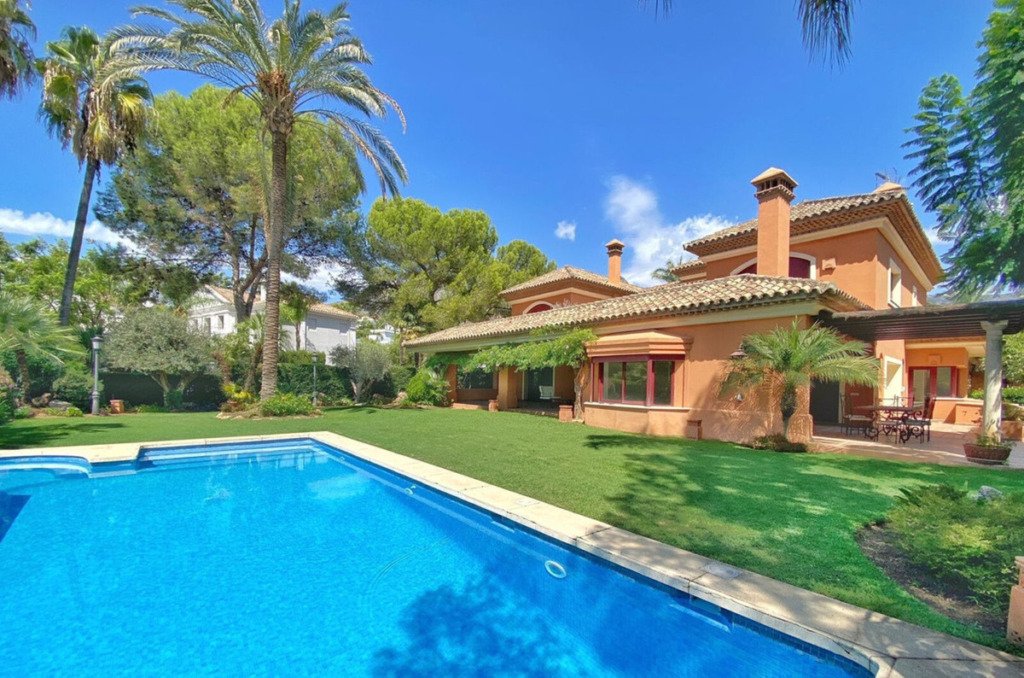
- Villas: they are mainly concentrated on the Golden Mile and its interior slope. The buyer will find everything from established villas susceptible to updating to very high standard contemporary properties, with a clear premium for privacy, plot, views and proximity to the sea.
- New construction and renewed product: the scarcity of land means that well-located new developments are limited. In parallel, there is a relevant market for completely renovated properties that allow access to established locations with contemporary interior standards.
Buy in Spain with a well-structured operation
Buying a property in Spain is accessible to the international buyer, but in the Centre and Golden Mile the variety of buildings, antiques and typologies requires analyzing each asset individually. In addition to ownership, charges and urban situation, it is advisable to review the community, spills, renovation licenses, technical status, efficiency of facilities and use restrictions when applicable. Inmolux Group coordinates the operation with the buyer's legal and tax advisors so that the decision is made with complete information.
Real estate value and demand
The main investment argument for Centro y Milla de Oro should not be reduced to a theoretical rental profitability. Its strength lies in the scarcity of certain positions, a broad international demand and the possibility of combining personal use with long-term value. Properties with a good location, distribution, exterior space and real quality usually offer a clearer future exit than properties chosen solely for their price per square meter.
Why buy in Marbella Centre or the Golden Mile
Because they allow access to two of the most difficult attributes to combine on the Costa del Sol: walking life and prime address. The centre offers immediacy, year-round activity and direct connection to the Mediterranean; the Golden Mile adds privacy, space and an exceptional concentration of high-end residential product. For Inmolux Group, the key is not to sell the name “Marbella”, but to identify which micro-location and which property really justify its price.
Tell us how you want to experience Marbella. Inmolux Group will select properties in the Centre and Golden Mile that truly respond to its priorities, discarding those whose price depends more on the address than on the quality of the asset.
Frequently asked questions
Approximately 40–45 minutes by car in normal conditions, with an approximate distance of 55–60 km to Marbella Centre.
There is no single price. As an offer reference for August 2026, apartments are around €5,752/m² in Marbella Centre and €5,881/m² on the Golden Mile. Prime homes, penthouses, first lines and certain communities can greatly exceed these averages.
Yes. Precisely its main difference is that it does not depend exclusively on the tourist season. Commerce, restaurants, services, health and urban life remain active throughout the year, especially in Marbella Centro.
In Marbella Centre it is perfectly possible to carry out a large part of daily life on foot. On the Golden Mile, a lot will depend on the specific location: properties close to the sea and the promenade allow greater pedestrian autonomy, while interior locations make it more convenient to have a car.
Marbella Centro prioritizes urban life, beach and services on foot. The Golden Mile generally offers greater privacy, larger scale properties and a more exclusive residential environment. Many buyers decide between the two precisely based on how much they value walking versus having more space and privacy.
The highest concentration of high-end residential product is found on the Golden Mile, especially in locations close to the Mediterranean, established communities and properties with characteristics that are difficult to replicate. However, certain penthouses and first lines in Marbella Centro also form an exceptionally scarce market.
In addition to the purchase price, taxes and expenses associated with the operation must be considered. The final amount depends on whether a new or used home is purchased, the price and the structure of the operation, so it is advisable to calculate it individually before making an offer.
In general terms, Marbella Centro offers a wider range of prices and typologies. The Golden Mile concentrates a greater proportion of premium products, although within both areas there are very important differences. Rather than comparing averages, it is advisable to analyze what you really get for the price: location, building, condition, views, terrace, parking and quality of the community.

Ready to take the next step?
Our team will help you find the right property and answer all your questions about living in Marbella.
Get in touch