



Every guide to this coast picks five beaches, ranks them, and stops. The town hall’s own catalogue lists twenty-four, running from Guadalmina in the west to Cabopino in the east.
That gap matters if you are here for more than a fortnight. The question that decides where people end up living is not which beach photographs best. It is which stretch of sand you would walk to, on a Tuesday in March, from the front door you are thinking of buying.
Marbella beach by beach, west to east
Starting at the Estepona side and moving towards Málaga, the municipal catalogue runs: Guadalmina, Linda Vista, San Pedro Alcántara (La Salida), Cortijo Blanco and Rodeito, Nueva Andalucía and El Duque, Puerto Banús, Río Verde, Casablanca, El Ancón, Nagüeles, La Fontanilla, El Faro, Venus-Bajadilla, El Cable, El Pinillo, El Realejo (Bahía Marbella), Las Adelfas, Las Cañas, Real de Zaragoza, El Alicate, La Vívora, Las Chapas, Calahonda, and Artola-Cabopino.
Two dozen names, and most of them never appear in a travel article. They are the ones locals use.
Which beach in Marbella suits which buyer
Broadly, the coast splits into four characters.
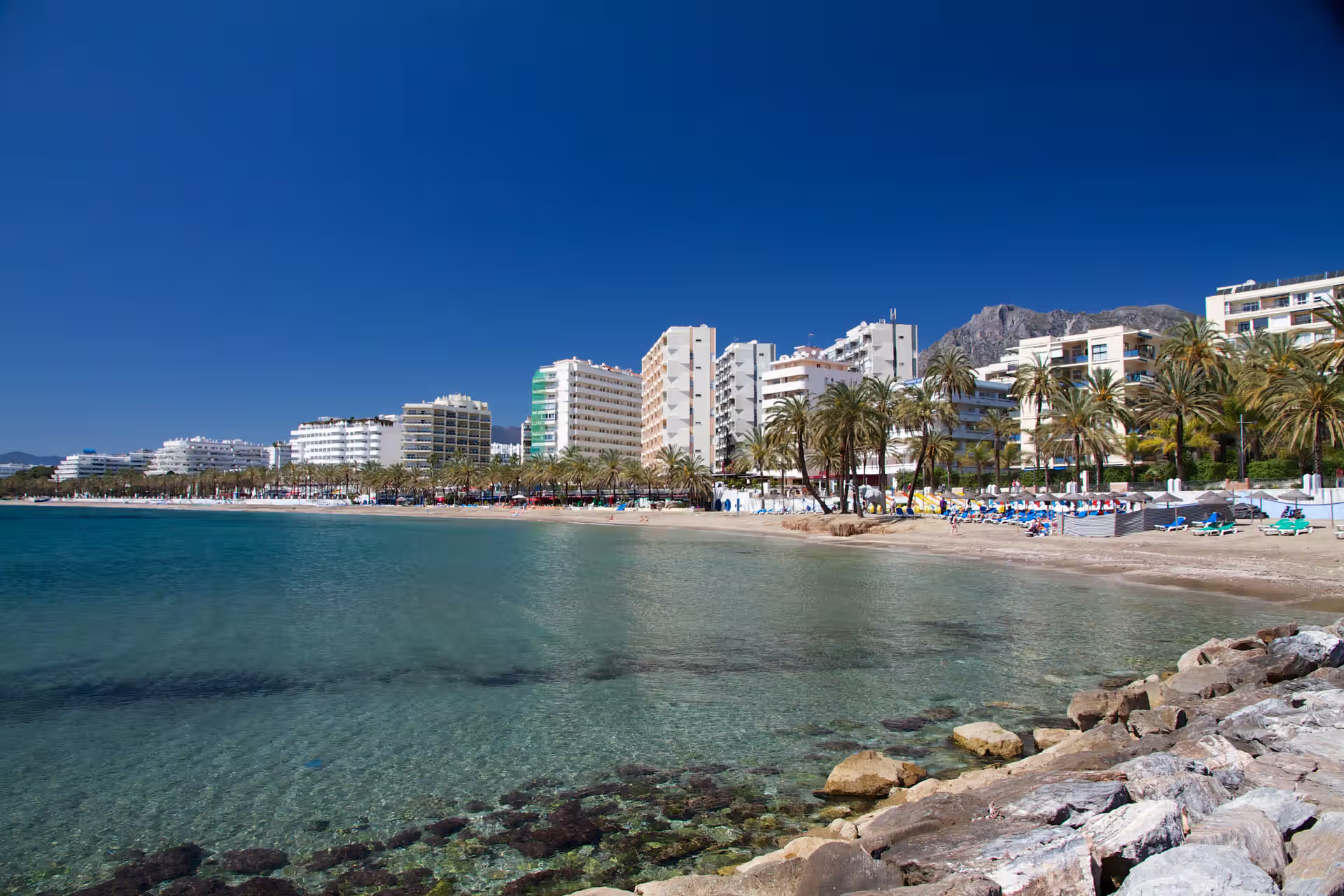
West of Puerto Banús, around Guadalmina, Linda Vista and San Pedro, the beaches are wide, quiet and residential, backing onto low-density housing and golf. Around Banús and Río Verde it turns social and busy, with the marina and the beach clubs. The central stretch, Casablanca through La Fontanilla and El Faro, is the walkable one, where the old town and the promenade meet the sand. East of the centre, from El Pinillo through Las Cañas and Real de Zaragoza to Las Chapas, it gets greener and more spread out, and by the time you reach Artola and Cabopino you are next to protected dunes rather than a promenade.
What sits behind each beach
This is the part that is missing everywhere else, and it is the only reason we are writing this.
Behind Guadalmina and Linda Vista is Guadalmina itself, a long-established residential area either side of the coast road. Puerto Banús backs its own beach, with Nueva Andalucía and the golf valley immediately inland. The Golden Mile stretch, Río Verde through Nagüeles, has Sierra Blanca rising behind it. The eastern beaches, El Pinillo through Real de Zaragoza, sit below Los Monteros. Further east again, La Vívora and Las Chapas open onto Elviria.
So when someone tells you a property is five minutes from the beach, the useful follow-up is which one. Five minutes from El Faro and five minutes from Artola are two completely different lives.
The beaches in Marbella nobody puts on a list
El Ancón, Las Adelfas, Las Cañas, El Realejo. Small, unglamorous, and usually empty in winter. They exist because the coast is longer than the postcard version of it, and they are often what people actually end up using once they live here.
Is there a best beach Marbella agrees on?
No, and anyone who tells you otherwise is selling something.
What there is instead is a fit. If you want to walk to dinner, the centre. If you want quiet and space, the east. If you want the marina and the social calendar, Banús. We are not going to rank them for you, because the ranking depends entirely on what you are buying and why.
Frequently asked questions
The town hall catalogues twenty-four, from Guadalmina in the west to Artola-Cabopino in the east. There is no single best one: the central beaches around La Fontanilla and El Faro are the walkable ones, Puerto Banús is the social choice, and the eastern stretch towards Cabopino is the quiet, green end of the coast.
Marbella’s coast is sand rather than shingle along its length, with the texture varying from the darker sand of the central beaches to the paler stretches out east. Conditions change with the weather and with the season, and the reliable source is the town hall’s own beach catalogue rather than a blog.
There are no private beaches in Spain: the shoreline is public by law, including the stretch in front of the most expensive houses on the coast. What does exist is seclusion by geography. The smaller beaches like El Ancón, Las Adelfas and Las Cañas are quiet most of the year simply because nobody signposts them.
The catalogue ends at Cabopino going east and at Guadalmina going west, but the coast does not. Immediately beyond, you reach the beaches of Mijas Costa on one side and Estepona on the other, both within a short drive and both with a different character again.
Start from the address, not the beach. Work out which of the twenty-four you would actually reach on foot, then go and stand on it in the off season. A beach that is perfect in August and deserted in February tells you something useful about the neighbourhood behind it.
Ready to take the next step?
Our team will help you find the right property and answer all your questions about living in Marbella.
Get in touch