








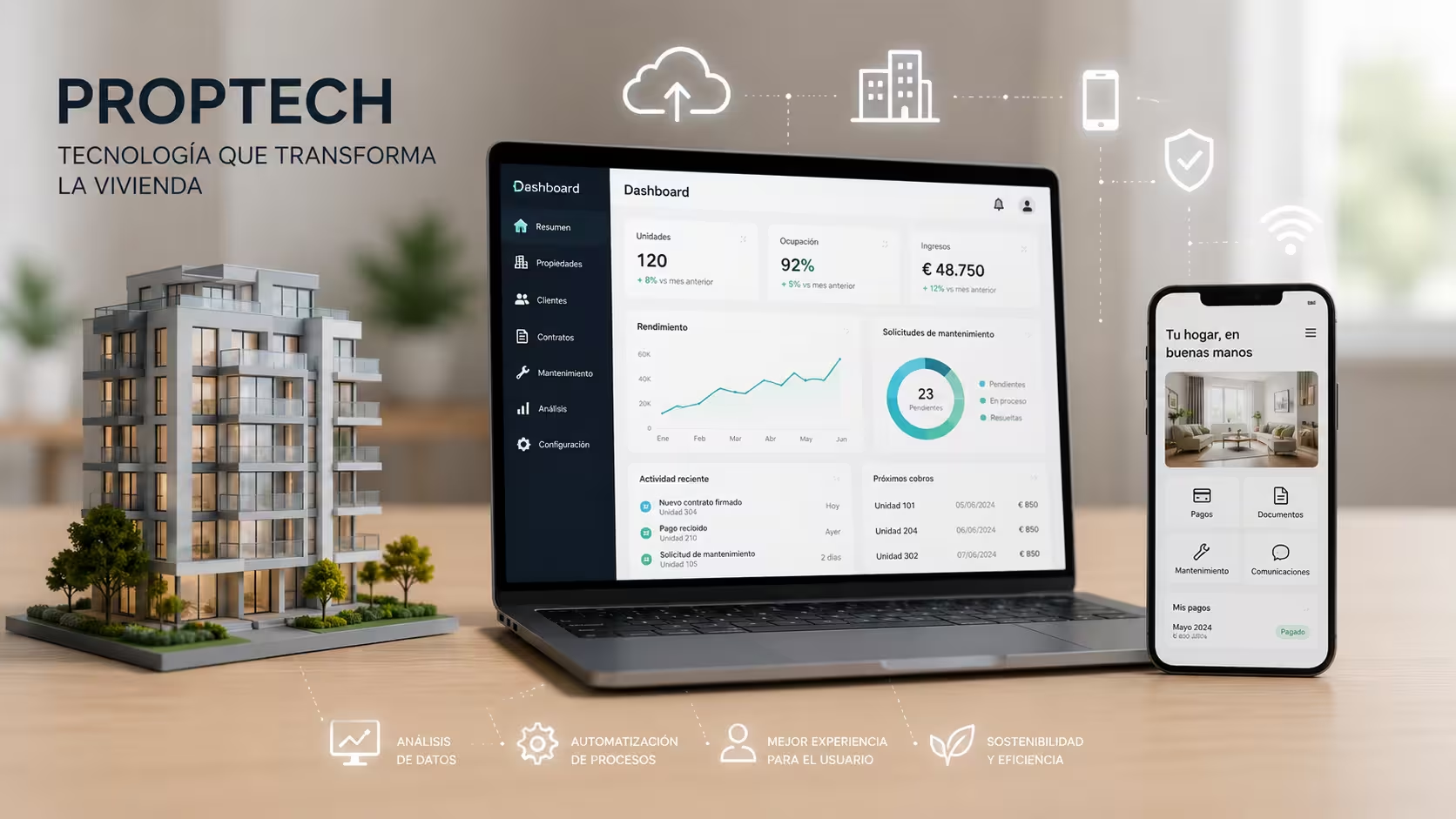
Real estate used to be sold on footwork and intuition. Today it's sold on data.
PropTech isn't a slide-deck buzzword. It's a shift that has already changed how we search, value, buy and manage property — and anyone ignoring it is losing money in real time.
What PropTech actually is
PropTech (property technology) is the set of tools transforming every stage of a real estate deal, from finding a property to managing it after purchase. The market is growing fast: analysts put its size at roughly $54 billion in 2026, heading toward $185 billion by 2034.
Behind those numbers is a simple truth: technology has stopped being an experiment and become core infrastructure. Today, the search for property on the Costa del Sol starts on a screen, not at an agency window.
Four technologies rewriting the rules
- Artificial intelligence: AI has moved from hype to core workflows. Among commercial operators, the share running live AI models has jumped from 5% to 92% in three years. AI forecasts prices, scores risk and cuts query handling from hours to minutes.
- Virtual and augmented tours (VR/AR): a buyer in Moscow or London can tour a Marbella villa without leaving the sofa, removing wasted flights and speeding up the decision.
- Blockchain and tokenisation: secure record-keeping, transparent transactions and the ability to split an asset into fractions for investors.
- IoT and smart homes: sensors, climate control and energy monitoring that tenants and investors increasingly expect as standard.
What it means for buyers and investors
Technology changes not just the speed but the very logic of the decision. Compare then and now:
| Stage | Before | Now with PropTech |
|---|---|---|
| Search | Touring agencies, paper catalogues | Online platforms with AI matching |
| Valuation | An agent's subjective opinion | Automated valuation from real sales |
| Viewing | An in-person visit to every property | A 3D virtual tour from anywhere |
| Closing | Paperwork, face-to-face meetings | Digital contracts, transparent registry |
For an investor, this means a sharper investment strategy: less emotion, more data-driven calculation. And modern new builds are increasingly designed with smart tech built in from day one.
The flip side: new risks
Digitalisation has brought new threats too. According to industry reports, business email compromise attacks rose by 1,760% since AI tools went mainstream. Around 22% of real estate clients have faced wire fraud attempts, and median losses from mortgage payoff fraud now exceed $389,000.
The takeaway is simple: technology speeds the deal up, but vetting your counterparty and confirming legal title matter more than ever. That's where a trusted partner on the ground is irreplaceable.
PropTech doesn't replace the expert — it amplifies one
A platform will show you a price and an AI will build a forecast, but the decision to buy a multi-million-euro villa still needs someone who knows the local market, the notaries and the pitfalls of Andalusia. The best strategy combines the power of technology with expertise on the ground.
Want to use data and technology for a smarter purchase on the Costa del Sol? Get in touch with the InmoLux team — we pair analytics with real expertise to match a property to your goal.